
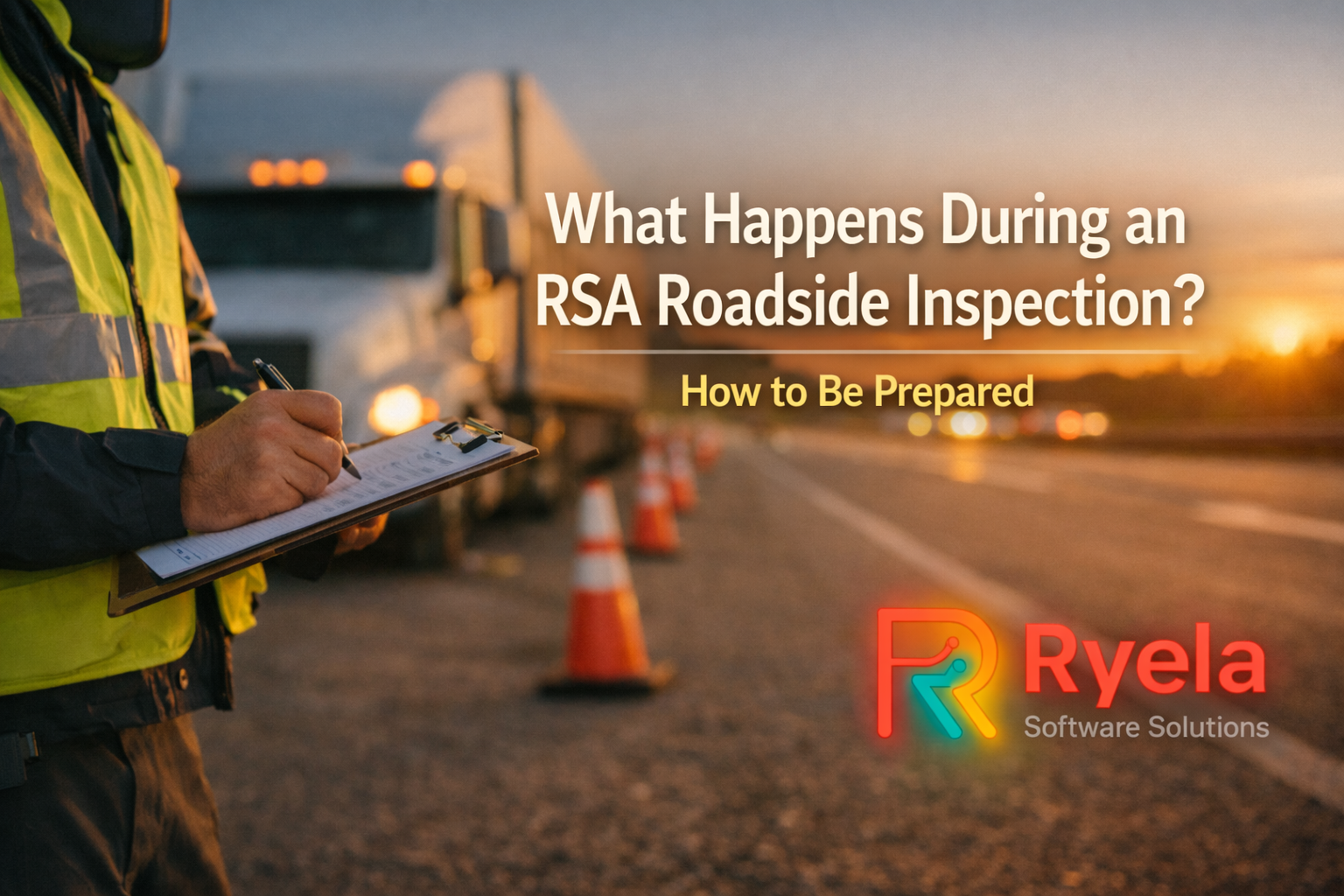
Your driver’s phone rings. “I’ve been stopped by RSA. They want to see our maintenance records.”
If that call makes your stomach drop, you’re not alone.
RSA roadside inspections are a reality for every commercial vehicle operator in Ireland. They can happen anytime, anywhere, without warning. And if you’re not prepared, they can result in fines, vehicle prohibitions, and operational chaos.
After two decades working with Irish logistics and haulage companies, I’ve heard every roadside inspection story imaginable. The prepared operators treat it as a minor inconvenience. The unprepared ones… well, let’s just say it gets expensive.
Here’s what actually happens during an RSA roadside inspection and how to make sure you’re ready.
What Is an RSA Roadside Inspection?
RSA (Road Safety Authority) enforcement officers have the legal authority to stop and inspect any commercial vehicle operating on Irish roads. These inspections are part of Ireland’s commitment to EU roadworthiness standards.
Roadside inspections can be:
- Random — Your vehicle is selected during routine patrol
- Targeted — Based on vehicle condition, operator history, or intelligence
- Checkpoint-style — Multiple vehicles inspected at a designated location
There’s no quota system. There’s no “best time” to avoid them. They happen when they happen.
What Do RSA Officers Actually Check?
Roadside inspections focus on immediate safety and compliance. Officers can examine:
Vehicle Condition:
- Tyres (tread depth, inflation, damage)
- Brakes (visual inspection and brake tests)
- Lights and reflectors
- Steering and suspension
- Exhaust emissions
- Load security
- Overall vehicle condition
Documentation:
- Certificate of Roadworthiness (CRW)
- Daily walkaround check records
- Maintenance and repair records
- Driver’s licence and CPC card
- Tachograph records (if applicable)
- Operator licence (for goods vehicles over 3.5t)
Driver Compliance:
- Hours of service
- Rest periods
- Tachograph usage
- Vehicle-specific requirements
The inspection can range from a quick document check (5–10 minutes) to a comprehensive examination (30+ minutes).
The Documentation Question Everyone Asks
“Can they really ask to see my daily walkaround checks right there on the roadside?”
Yes. Absolutely yes.
SI 348/2013 requires you to retain daily walkaround check records for two years. RSA officers can request to see these records at any time, including during roadside inspections.
This is where operators using paper systems run into problems.
The Paper Problem:
Your driver completes daily checks on paper forms. He hands them in at the end of the week. You file them in the office. RSA stops the vehicle on Tuesday and asks to see Monday’s check.
The form is in your filing cabinet. 50 kilometres away.
Now what?
Some operators try to fax or email the form. Some drivers have photos on their phones. Some promise to produce it later. None of these solutions are ideal, and RSA officers aren’t obligated to accept them.
The Digital Solution:
Digital check systems store records in the cloud. Your driver opens the app, shows the last 90 days of checks in 10 seconds. Officer is satisfied. Driver continues.
It’s not just convenient. It’s the difference between a 5-minute stop and a 30-minute delay while you scramble to find paperwork.
What Happens If Defects Are Found?
RSA officers have several enforcement options depending on what they find:
Minor Defects:
Items that don’t pose immediate safety risks but need attention (cracked mirror, worn wiper blade). You’ll be advised to repair them, but the vehicle can continue operating.
Major Defects:
Issues that compromise safety but allow the vehicle to be driven carefully to a repair facility (worn brake pads, damaged tyre that’s not critical). You may receive a prohibition that allows movement to the nearest suitable repair location.
Dangerous Defects:
Serious safety hazards (failed brakes, bald tyres, critical structural damage). The vehicle is prohibited from moving until repaired. It’s not going anywhere.
If your vehicle is prohibited, it cannot be operated until:
- Repairs are completed by a qualified person
- The vehicle passes a reinspection or provides evidence of repair
- The prohibition is formally lifted
This can mean towing the vehicle, finding emergency repair services, rescheduling deliveries, and dealing with stranded cargo.
The Financial Reality of Roadside Violations
Let’s talk money, because that’s what most operators care about.
Fixed Penalty Notices:
Failure to produce required records: €2,500 (first offence), €5,000 (second).
Vehicle Prohibition Costs:
- Towing: €200–500+
- Lost revenue while vehicle is off-road
- Customer penalties for missed deliveries
- Reputation damage
- Emergency repair costs (often inflated)
Prosecution:
Serious or repeated violations can result in court prosecution with fines up to €5,000 and potential operator licence implications.
One roadside inspection that goes badly can cost you more than a year’s worth of proper compliance systems.
How to Prepare for Roadside Inspections
The operators who breeze through RSA inspections all do the same things:
1. Maintain Your Vehicles Properly
This seems obvious, but it’s the foundation. Daily walkaround checks catch issues before RSA does. Scheduled preventative maintenance keeps vehicles roadworthy.
If you’re cutting corners on maintenance, roadside inspections will expose it eventually.
2. Keep Documentation Accessible
Your daily check records need to be available immediately. Not “back at the office.” Not “I’ll email it to you.” Immediately.
Digital systems excel here because cloud storage means records are accessible from anywhere.
3. Train Your Drivers
Drivers should know:
- What documents they need to carry
- Where to find digital records if applicable
- How to communicate professionally with RSA officers
- Who to contact if issues arise
A well-trained driver can handle most roadside inspections without needing to call you in a panic.
4. Fix Defects Promptly
If a daily walkaround check identifies a defect, repair it immediately. Don’t send the vehicle out hoping it won’t be noticed. RSA officers are trained to spot exactly what your driver should have caught.
5. Know Your Obligations
Understand what records you’re legally required to maintain and for how long. Two years for maintenance records. Tachograph records have different requirements. CPC cards must be current.
Ignorance of the law isn’t a defence.
What If Your Vehicle Is Prohibited?
If RSA prohibits your vehicle, stay calm and professional:
- Get details in writing — Understand exactly what needs to be repaired and the reinspection requirements
- Arrange repairs — Contact a qualified technician immediately
- Document everything — Keep records of what was repaired and by whom
- Don’t move the vehicle — Unless specifically authorised to drive to a repair facility
- Complete reinspection — Follow the prohibition lifting process exactly
Arguing with the officer won’t help. The prohibition stands until the defect is corrected.
The Risk Rating Factor
Many operators don’t realise that Ireland uses an EU Common Formula risk rating system for commercial vehicle operators.
Your risk rating is influenced by:
- Roadside inspection results
- Defect rates
- Prohibition history
- Compliance record
A poor risk rating means more frequent inspections. A good rating means you’re lower priority. Your roadside inspection performance directly impacts how often you’ll be stopped in the future.
The Real Cost of Non-Compliance
Here’s what a roadside inspection failure actually costs:
Immediate:
- €2,500+ in fines
- Vehicle off-road (lost revenue)
- Emergency repairs
- Customer relationship damage
Long-term:
- Increased inspection frequency (poor risk rating)
- Insurance premium impacts
- Operator licence scrutiny
- Reputation in the industry
Worst case:
- Court prosecution
- Loss of operator licence
- Business closure
Compare that to the cost of proper compliance systems. It’s not even close.
The Bottom Line
Roadside inspections aren’t meant to catch you out. They’re meant to ensure safe vehicles are operating on Irish roads.
But they will expose any shortcuts you’re taking with maintenance and documentation.
The operators who stress about RSA inspections are the ones who know their systems aren’t quite right. The ones who don’t worry are the ones who maintain vehicles properly and keep accessible records.
If your driver got stopped tomorrow morning, could they show 90 days of walkaround checks on the spot? If the answer isn’t an immediate yes, that’s your problem to solve. I built Ryela to solve exactly that. Have a look at assettrac.ie or message me directly.
— Dave Lynch, Founder, Ryela Software Solutions